If you’re seeing ants, roaches, or mice inside your home, the first question is almost
always:
“How are they getting in?”
The frustrating answer? Most of the time, you won’t see the entry point; even when
you’re staring right at it.
Here’s where pests are hiding their way inside, why you keep missing it, and what
actually stops them.
Quick Answer: How Do Pests Get Into Homes in NYC & NJ?
Pests enter through small, often hidden openings around doors, windows, foundations,
and utility lines; many of which are smaller than a dime and completely invisible to the
untrained eye.
In urban environments like New York City and Northern New Jersey, even a gap the
width of a credit card is enough for ants, roaches, and mice to squeeze through. Most
homeowners don’t realize pests aren’t ‘finding a way in’; they’re using openings that have
been there the entire time.
Why You’re Not Seeing the Entry Point (Even Though You’re
Looking)
Most homeowners check obvious spots: the front door, kitchen windows, visible cracks
in the wall.
But real pest entry points are almost never obvious.
They’re typically:
● Behind appliances (refrigerators, stoves, dishwashers)
● Along baseboards hidden by furniture or clutter
● Around pipes and utility lines under sinks and in basements
● Inside wall voids that connect to neighboring units
● Around window frames and door seals where caulk has aged or cracked
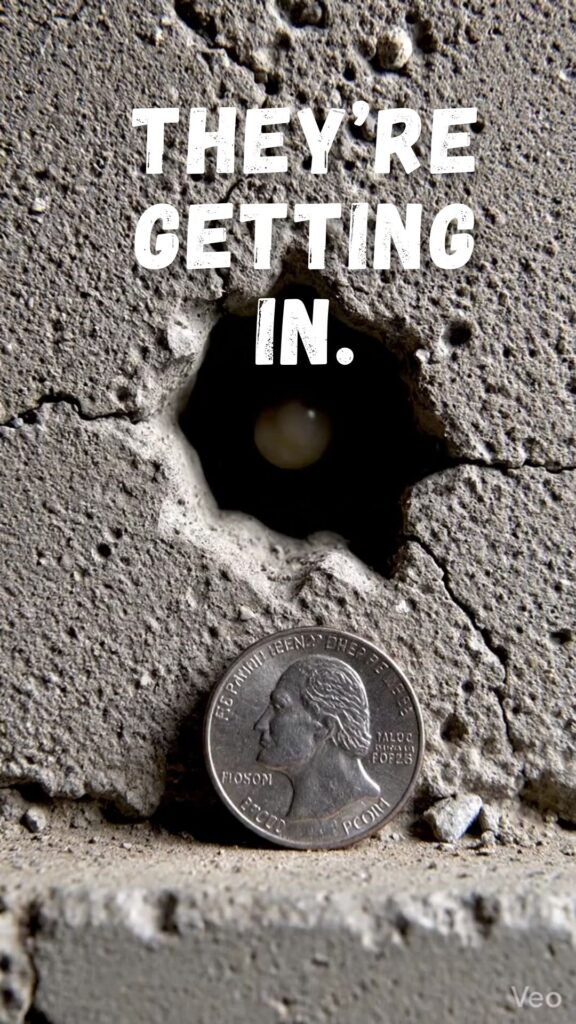
In NYC and Northern NJ homes, a gap the size of a coin (about 1/4 inch) is all a mouse
needs. Ants and roaches need even less, just 1/16 of an inch.
The Most Common Entry Points in Urban Homes
- Door Gaps and Thresholds
Small gaps under exterior doors, especially in older apartment buildings and
townhomes, are one of the easiest access points. Light shining under a door at night
means pests can get in. - Window Frames and Seals
Worn, cracked, or missing weatherstripping allows insects to enter, particularly in
buildings with original windows. Check both the interior and exterior sides. - Foundation Cracks
Tiny cracks along the foundation or exterior walls can lead directly inside. In multi-unit
buildings, these cracks often run between adjacent units. - Utility and Pipe Openings
Areas where cables, pipes, HVAC lines, or gas lines enter the home are routinely left
unsealed. This is the #1 overlooked entry point during DIY inspections. - Shared Walls and Adjacent Units (NYC & NJ Specific)
In apartments, condos, and townhomes, pests move freely between units through
shared walls, electrical chases, and plumbing voids. You can have a spotless home and
still get pests from a neighbor.
Why DIY Solutions Don’t Solve This Problem
Most DIY treatments focus on what you can see:
● Spraying visible pests
● Cleaning surfaces
● Setting traps or baits
But if entry points remain open, pests will continue to return, often within days.
This is why so many homeowners feel like the problem “never fully goes away.” You’re
treating the symptom, not the cause.
What Professional Pest Control Looks For (That You Don’t)
At Chelsea Pest Control, we don’t just treat where pests show up, we find how they’re
getting in.
A professional inspection identifies:
● Hidden entry points you would never notice on your own
● Structural vulnerabilities specific to NYC/NJ buildings
● Active pest pathways (trails, droppings, grease marks)
● Conditions attracting pests (moisture, food sources, harborage areas)
● Neighbor-to-neighbor transfer points in multi-unit buildings
From there, we create a plan to stop the problem at the source, not just chase pests
around your home.
What You Can Do Right Now (Before Calling)
If you’re currently seeing pests:
● Check around doors and windows for visible gaps or light shining through
● Look under sinks where pipes enter walls—feel for air movement
● Pull appliances away from walls (carefully) to inspect behind them
● Pay attention to patterns – Are pests always appearing in the same room or
along the same wall?
● Avoid relying only on sprays – They won’t seal entry points
These steps can help you identify patterns, but they won’t fully solve the issue without
professional sealing and treatment.
Stop the Problem at the Source
If pests are getting inside, they’ve already found a way in and they’ll keep using it until
it’s properly sealed.
Schedule an inspection with Chelsea Pest Control and stop the problem at its source
before it spreads further.